
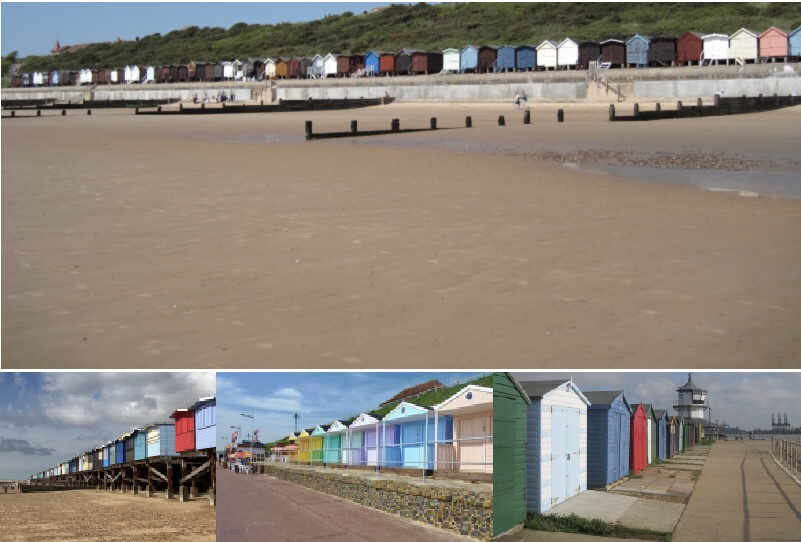
Tendring Council has approved a massive hike in charges for beach hut owners from next year.
Exact increases have not been made available to the public; however, the council has confirmed that commercial leases will double annually, and private leases will be at least 10% higher annually. Commercial leases allow owners to rent out their huts to day-trippers and holiday-makers; private leases prohibit owners from making money from their huts.
The ruling affects 3,345 beach hut owners along the North Essex coast, including Brightlingsea, Clacton, Dovercourt, Frinton-on-Sea, Harwich, Holland-on-Sea and Walton-on-Sea.
A beach hut owner who did not want to be named said: “We are distraught that higher lease fees and rentals, limited to only ten days per year, will mean we must sell our hut under a personal lease. We know many hut owners are highly concerned about this new ruling and are also considering selling. These proposals also mean fewer beach huts will be available to rent to families. Visitors to the coast who have previously been able to enjoy using a hut without the costly overheads associated with ownership will find the increased rental costs unaffordable.”
Exact increases have not been made available to the public; however, the council has confirmed that commercial leases will double annually, and private leases will be at least 10% higher annually.
If you cannot afford the new lease and do not comply with this legal requirement, the Tendring council, as landowner, has the right to ask you to take your beach hut away, or it will remove it for you at a charge.
Beach hut owners who rent the land have only one possession, the hut. You might have purchased your beach hut for £30,000 or more, but its real value is that of a garden shed. An example of a law case regarding this issue is Gilpin v Legg (2017). The outcome of this case was decided by this question: Is a beach hut a fixture or a chattel? A fixture is a structure sufficiently fixed to the property to form part of the property and must be returned to the land owner at the end of a lease. Beach huts are only minimally attached to the land. Huts are made of separate wooden panels capable of being dismantled and removed. In the legal case of Gilpin v Legg, the Court set a precedent that beach huts are chattels.
According to Tendring Council: “If a Site Licence ends determines or is terminated for any reason, and a Hut remains on the Site without a Licence the Council may sell the Hut.”. You could lose your beach hut if you don’t comply with this new ruling!
A beach hut in Southwold Suffolk is currently on the market for £85,000 and has a 30-year lease. In Frinton-on-Sea (within the Tendring area), a similar beach hut was advertised for £85,000. Comparing the leases of 30 years in Southwold to 7 years in Tendring, the value of the beach hut in Frinton would be 43% less and on the market for £36,550. That is a loss of over £48,000.
Before adopting this new ruling, Tendring Council did an in-house survey of 10 questions involving 1507 people. Over 50% of those people lived outside the area. Eight hundred and ninety-one of those people had beach huts, and 46% of those people with beach huts lived outside the Tendring area. Questions relating to the strategy included question 2: How many people were interested in a commercial licence to rent out my beach hut? 92% of people responded NO. On the central question of moving licences to leases, only 16% agreed with the change. Doing the maths, 84% of people did not agree with the changes that have been adopted. The council has not reviewed their survey results and listened to public opinion.
The council have yet to list the actual prices or proper detailed business plan for their approved ‘Tendring Beach Hut Strategy’. They have said the new charges would cover all costs for the strategy. The Beach Hut Strategy document states, “It should be noted that this strategy does not commit the Council to any additional expenditure”. If the council have yet to produce the actual increased fees they will charge, how are they aware that the new charges will cover the costs of the new scheme?
The current cost of living crisis and the loss of earnings from beach hut rentals during the pandemic leaves owners no reserves to fund a land rental increase on their beach huts. Due to the council’s new increased land price policy, hundreds of beach huts owners will be selling their beach huts at less money than their purchase price. The rental market will have to increase dramatically to reflect the new double-priced commercial rates. At a time when upcoming local Council elections are on Thursday, 4 May 2023, why has the council approved this controversial decision? Will the council compensate beach hut owners for their financial losses caused by the new regulations?
The Tendring Beach Hut Strategy is simply unrealistic; it is realistic to consider that the council needs to raise funds but not at the detriment and demise of beach hut affordability, tourism and the mental and physical joy beach huts bring to human beings. Would you, as the seller, be able to complete a car purchase without the buyer knowing the price or how they would pay for the car? This decision by Tendring Council sets a dangerous precedent for other Councils that you can implement a strategy without showing a complete business plan or actual pricing. Tendring Council must take full responsibility for their decision which will negatively impact the lives of thousands of people.
WHAT CAN YOU DO? A petition against the move to leases is open until June 30. For more information visit bit.ly/3l21ptw.
 Soozi’s Grown Up Life