
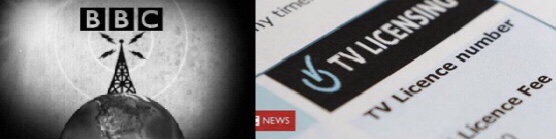
“TRUST is the foundation of the BBC – we’re independent, impartial, and truthful”. [1]
The British Broadcasting Corporation (the BBC) is a State-run media organisation receiving its funding from a licence fee paid by every household that watches or receives television on any device in the United Kingdom. The BBC have a defined Government Agreement with The Secretary of State for Culture, Media and Sport which sets out how they behave and use the money they receive from the licence fee. I will look at a few factors in predicting the sustainability of the BBC Licence until 2043 by providing: the history of the licence fee; checking the BBC’s accountability to their Code of Conduct; the licence cost and value for money; do other countries have a similar licence and ultimately, do I think the current BBC licence fee will survive another twenty years?.
The first annual licence fee for radio or television in the United Kingdom was introduced in 1923 under the Wireless Telegraphy Act. The yearly cost was ten shillings or fifty-pence in today’s money. A combined radio and TV licence started in 1946, costing two pounds annually which was collected by the Post Office. Today’s TV licence annual cost for homes or businesses is £159 for a colour television and £53.50 for a black and white TV. Many of today’s young will be unaware that a TV was available in black and white. All devices that pick up a broadcast need a licence unless they can prove they don’t have access to the BBC. There is a discount or zero cost, if you are over seventy-five, on pension credit, blind or in residential care. Under the Communications (Television Licensing) Regulations 2004, you will be fined up to £1,000 and could go to jailif you watch or record live TV without a licence.[2]
The BBC’s rules on social media guidelines state “Those working for the BBC have an obligation to ensure that the BBC’s editorial decisions are not perceived to be influenced by any personal interest or bias. We must retain the trust of the audiences we serve and maintain the BBC’s reputation and impartiality.”[3]
The BBC’s commitment and ethics of providing impartial information by themselves and their employees was not the case on 8 March, 2023. Gary Lineker, a BBC contractual employee, wrote comments on his Twitter page, interpreted by many as comparing a Home Office policy to Nazi Germany. “There is no huge influx. We take far fewer refugees than other major European countries. This is just an immeasurably cruel policy directed at the most vulnerable people in language that is not dissimilar to that used by Germany in the 30s, and I’m out of order?”.[4]
Gary Lineker is the top-earning BBC broadcaster, paid between £1,350,00 and £1,354,999 in 2021-2022. His personal political outbursts on social media questioned the ethics of the BBC’s unbiased protocol. Mr Lineker had wall-to-wall coverage throughout society, verbally, visually and in print for four solid days, and his latest statement continues to provide a great source of debate. Lineker is not alone, and other more familiar names who have broken the BBC’s Code of Conduct include Jeremy Clarkson and Danny Baker.
A very recent example of impartiality by the BBC came on 28 March, 2023, when Professor Frank Coffield accused the BBC that the show University Challenge is “rigged” towards elitist colleges. University Challenge allows separate Oxford and Cambridge colleges to enter the contest while limiting other universities to one entry each. According to the Guardian Newspaper, Professor Coffield, under the Freedom of Information Act had requested further details from the BBC. In reply, the BBC said: “If held, the information you requested is held for the purposes of ‘art, journalism or literature’.” As such, it said the BBC is not obliged to supply the figures. Professor Coffield responded; what have they got to hide?
The BBC’s fortnightly complaints report[5] further demonstrates their impartiality. Between 27 February and 12 March, 2023, the BBC received a total of 8,189 complaints about programmes. The BBC confirmed they apologised to 1,077 of those complaints in recognition of their impartiality.
Other Countries around the world do have funding for a TV licence or monies for public TV stations however some of those, unlike the BBC, also receive money from advertising and subscription. Sixty-seven percent of European Countries require a licence however it is almost unknown in Africa, Asia and North America. “The UK is fairly unique,” says Tim Westcott, principal TV programming analyst for IHS Technology. “The UK model is that you have a public broadcaster which doesn’t have advertising or subscription as part of its funding mix.”
Finland disposed of its’ TV licence in 2013 and replaced it with a public broadcasting tax called YLE. The annual payment is based on 2.5% of your income but is capped at a maximum of £143. If you are under 18 or your income is below £12,293, you pay nothing, and pensioners pay an average of £64.[6] The UK Government reported in a detailed document in March 2021 that Finland,“After the introduction of the public service broadcasting tax, YLE’s income has increased from €432.4m in 2011 to around €475m per year. The tax has been successful in terms of ensuring adequate funding for public service broadcasting, partly because of a supportive political climate. The fund has also been set up to safeguard against political interference, sitting outside of the state budget.” [7].
The BBC provides phenomenal programming through their various forms of broadcast within TV, radio, websites, podcasts, iPlayer and apps. They have been global pioneers in broadcasting for millions of reasons. These are just a few of the BBC’s credits: the first to broadcast war when in 1939, Neville Chamberlain announced,’this country is at war with Germany’; In 1948, they were the first to streamline the Olympics on domestic television; In 1955 they produced the first deaf programme; In 1969 they did the first all night broadcast of the Moon landing; In 2015 they won the award for Outstanding British Contribution to Cinema, in recognition of a catalogue of over 300 films including the likes of Truly, Madly, Deeply, Billy Elliot and Judy, and in 2017 with the Blue Planet II, they changed the minds of sixty-seven percent of their thirty-seven million viewer’s on how our planet needs saving.
The first BBC licence was introduced a hundred years ago, and in 1923 things were very different. You would be hard-pressed today to find a black-and-white television. In 2023, you can watch and listen to the BBC on the internet, with mobile phones, tablets and even watches. Some might say the State-run BBC have a monopoly over the airways with their mandatory TV licence; however, the BBC’s excellent world class programme selection is worth keeping. A new licensing system must adapt to today’s technology and population whilst being realistic that it is impossible to be utterly non-biased within broadcasting.
In my opinion, by 2043, the BBC’s current TV Licence wording will not exist; however, it will be replaced by a concept that supports the BBC financially and gains those funds from UK taxes based on our earnings. Combining the new financially supported tax system broadcasting licence with the changes to the BBC’s Code of Conduct, will bring the hundred-year-old TV licence into the twenty-first century.
The British Broadcasting Corporation must survive and continue to provide us with incredible sounds and sights within broadcasting. “Am I Bovvered?”[8] (Catherine Tate), Yes I am; “I have a cunning plan”[9](Black Adder), Yes I do; and “Just like that”[10] (Tommy Cooper); “Real success can only come if there is a change in our societies and in our economics and in our politics.”[11] (David Attenborough).
[1] https://downloads.bbc.co.uk/aboutthebbc/insidethebbc/howwework/policiesandguidelines/pdf/code-of-conduct-2022.pdf
[2] TV Licence – GOV.UK. (n.d.). https://www.gov.uk/TV-licence
[3] Guidance: Individual Use of Social Media. (n.d.). Editorial Guidelines. https://www.bbc.co.uk/editorialguidelines/guidance/individual-use-of-social-media/
[4] https://twitter.com/garylineker?s=11&t=L-GTSOTiNulTmd5bEZFKZA
[5] “Fortnightly Complaints Reports | Contact the BBC,” March 16, 2023. https://www.bbc.co.uk/contact/complaint-service-reports.
[6] vero.fi. “Public Broadcasting Tax and Åland Islands Media Fee,” n.d. https://www.vero.fi/en/About-us/newsroom/visual_aids_for_presentations_and_for_t/public_broadcasting_tax/.
[7] https://publications.parliament.uk/pa/cm5801/cmselect/cmcumeds/156/15609.htm
[8] BBC. “Am I Bovvered?,”:The Catherine Tate Show.August 25, 2005. https://www.bbc.co.uk/programmes/p008tw11.
[9] BBC. “I Have a Cunning Plan,” :Black Adder.September 24, 1987. https://www.bbc.co.uk/programmes/p008tw62.
[10] BBC. “Just Like That,”:Tommy Cooper. November 8, 1964. https://www.bbc.co.uk/programmes/p008TVsd.
[11] Ng, Kate. “David Attenborough Turns 95: His Best Quotes on Nature, Sustainability and Humankind.” The Independent, May 8, 2021. https://www.independent.co.uk/climate-change/sustainable-living/david-attenborough-sustainability-environment-quotes-b1843859.html.
 Soozi’s Grown Up Life