
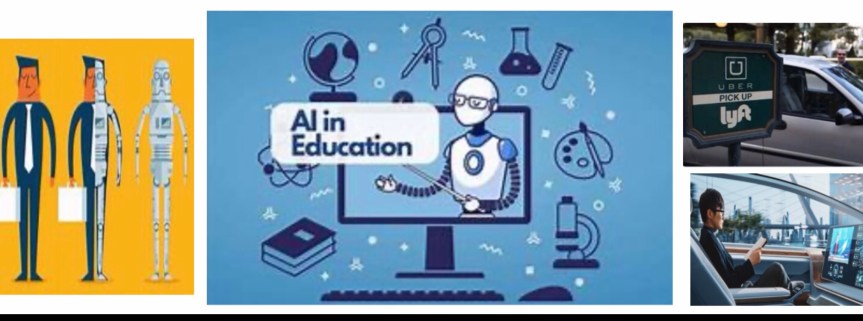
Living in a future where the concept of a historical conventional job is on the brink of extinction may appear like a far fetched idea; however, we stand on the precipice of a future where artificial intelligence takes human jobs.
You might think this is a dystopian tale, but several nations, including the United States, the United Kingdom, Finland, Spain, and Kenya, have already implemented or are planning trials for Universal Basic Income (UBI). In this model, every adult citizen regularly receives a fixed amount but cannot work.
AI currently impacts many industries and roles, particularly those involving human interaction, repetitive tasks, data analysis, and decision making processes. The following jobs may have already gone to AI, but if they are not, they are likely to go shortly:
· Transportation and logistics replaced by AI self driving trucks, cars and drones.
· Finance and Accountants replaced by AI bookkeeping software.
· Manufacturing replaced by robots and automated storage.
· Healthcare will be replaced with AI diagnostics.
· Education where tutors and students use AI powered learning platforms.
All these industries will have AI complete tasks in minuscule moments compared to humans labouring hours and days, and technology will complete these tasks without mistakes and take far fewer sick days. There are many other areas where AI will replace our historical normality of human employment, but to cover all of them would require a novel. The dramatic ongoing changes within the AI automotive industry and education’s vital role in navigating this new world should suffice as an explanation.
The automotive industry is having to change. Business Insider reported that globally, in 2024, manufacturers will be cutting jobs dramatically. Tesla is cutting more than 10% of its global staff. Detroit General Motors aims to remove $2 billion in costs in 2024. Ford plans to cut 4,000 jobs from its European workforce by 2027. For the first time in its history, Volkswagen in Germany closed three factories in 2024 and cut over 10,000 jobs.
The automotive industry knows that driverless vehicles will replace today’s conventional carriage vehicles, perhaps similar to the automobile replacing the horse and cart. Driverless cars are on the brink of revolutionising how we commute and our society’s fabric.
Electric driverless cars will dramatically change our lives when we use them as outsourced transport that we do not own. Private cars are active 5% of the time, sitting idle for the other 95%, and driverless cars are expected to be electric, reducing greenhouse gas emissions and air pollution.
Uber and Chinese car manufacturer BYD announced a new partnership over four years ago, bringing more than 100,000 new electric vehicles with driverless technology to Europe and Latin America.
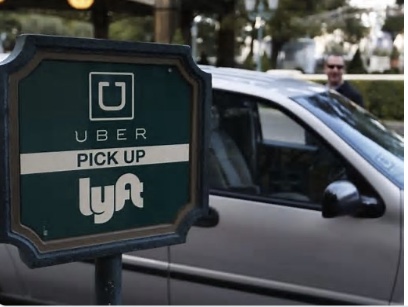
Emerald Publishing reported on driverless cars and their impact on our future. Human error accounts for 90% of road accidents. Autonomous vehicles equipped with cutting edge technologies promise to eliminate these risks.
However, this progress comes with trade offs. Entire industries built around traditional car ownership are likely to face upheaval. Petrol stations, mechanics, car, and car insurance will be sourced centrally.
Multi storey car parks will become extinct. Autonomous vehicles could continuously circulate or park in centralised hubs far from city centres. The frustrating activity of finding a free parking space and parking space rage would be obsolete.
With the demise of private car ownership, personal garages and car parking spaces will become unnecessary, and these spaces could become living spaces.
Driverless vehicles could empower the elderly and disabled populations, providing them with newfound mobility and reducing social isolation. This AI technology may even help them live independently for longer, saving thousands of pounds in care homes.
New skills are needed to fill these employment positions. Large scale fleet management will become essential, requiring workers skilled in AI logistics and technicians specialising in advanced AI systems. Urban planners and architects must redesign cities, repurposing parking areas into green spaces, housing, or community facilities.
This driverless revolution is not merely about transportation but about reimagining the future of how we live, work, and interact. It is only the beginning of what promises to be one of the most transformative innovations of our time.
Educational institutions must urgently adapt their curriculum at all levels to prepare students for an AI driven future.
Professor Karthik Krishnan, the former global CEO of Britannica Group and currently a lecturer at New York University, said in April 2020, “Our education system, built on the Industrial Revolution model, focuses on IQ, in particular memorisation and standardisation skills that will be easily and efficiently supplanted by artificial and augmented intelligence.”
Blake Lemoine, a former Google engineer, stressed the importance of adaptability in his 2024 lecture at The University of Massachusetts Amherst. He argued that instead of teaching young people to memorise facts, we should train them to think like programmers and problem solvers who can adapt to challenges and work creatively with complex systems.
Universities have already started responding to the lack of AI qualifications by updating their curriculum. In the US, Emory University and the University of Florida now offer specialised AI minors and certificates. In the UK, The University of Oxford, Cambridge, Edinburgh, and Imperial College London offer AI degrees and real world applications. These universities emphasise learning, research, and ethical AI innovation, preparing graduates for roles in sectors such as healthcare, finance, and urban planning.
AI education is also beginning to trickle down to younger students. The Raspberry Pi Foundation provides training to introduce young students to AI concepts. However, a nationwide, formal AI curriculum is still in its infancy, signalling the need for broader educational reforms to ensure the next generation is well prepared for an AI dominated future.
Courses in AI related fields would open doors to new employment across industries. Data Science and Analytics programs prepare students for positions like data analysts, data scientists, and business intelligence developers. Machine Learning and AI Development equip graduates for careers as AI engineers and robotics programmers. Studies in Ethical AI and Responsible Innovation create pathways to roles such as AI ethicists, policy advisors, and compliance officers. AI integrated degrees also unlock opportunities in healthcare, with roles like AI diagnostics specialists and bioinformatics researchers (the use of computers and analytical tools to collect and interpret biological information, such as DNA sequences and protein structures), and in urban planning, where graduates help integrate AI into infrastructure. Additionally, combining AI with education can lead to developing adaptive learning platforms or training future AI educators, ensuring AI expertise drives innovation across sectors.
Professor Steven Spier of Kingston University Vice Chancellor highlights the economic impact of the data skills gap, with the UK economy losing £57.2 billion annually. Spier emphasises the need to address this challenge through the Future Skills curriculum. “To keep the economy thriving, universities, businesses, and policymakers must work together to equip graduates with future proof skills. In this new AI driven era, there is no time to waste”.
As we look to the horizon, one cannot help but feel both apprehension and hope. The rapid rise of AI is both a threat and an opportunity. It threatens traditional notions of work, autonomy, and human connection but also offers a chance to rethink how we live and interact. Society needs to quickly develop global AI education for breathing humans to stay in control and work constructively in this new AI world on our human planet.
 Soozi’s Grown Up Life